
Introduction
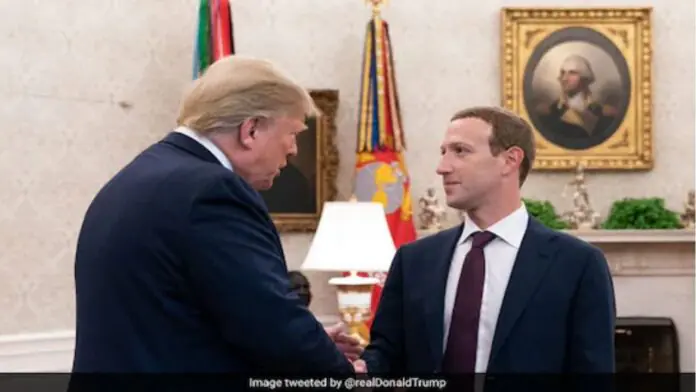
In a dramatic shift aligning with President-elect Donald Trump’s vision, Meta CEO Mark Zuckerberg has announced sweeping changes to the company’s content moderation policies. These changes, which include ending third-party fact-checking and relaxing restrictions on political content, mark a significant pivot for the social media giant. Zuckerberg described the recent election as a “cultural tipping point” towards prioritizing free speech, signaling a new era for Meta’s platforms, including Facebook, Instagram, and Threads .
Key Changes Announced by Meta
1. End of Third-Party Fact-Checking
Meta will no longer partner with independent fact-checking organizations, a program that has been in place since 2016. Instead, the company will adopt a “Community Notes” system, similar to Elon Musk’s X (formerly Twitter). This system allows users to add context to posts, with notes appearing only if they are rated as helpful by a diverse range of users .
Zuckerberg criticized the fact-checking program, stating that it had become “too politically biased” and “destroyed more trust than it created.” He emphasized that the new approach would reduce censorship and restore free expression on Meta’s platforms .
2. Relaxed Moderation Policies
Meta will ease restrictions on topics like immigration and gender identity, which Zuckerberg described as “out of touch with mainstream discourse.” Automated moderation systems will now focus only on high-severity violations, such as terrorism, child exploitation, and illegal activities. For less severe violations, Meta will rely on user reports before taking action .
3. Increased Political Content
Meta plans to reintroduce political content into users’ feeds, reversing a 2021 decision to reduce such posts due to user stress. The company will use a “personalized approach” to recommend political content based on user preferences, aiming to balance engagement with community positivity .
4. Relocation of Trust and Safety Teams
Meta is moving its content moderation teams from California to Texas, citing concerns about bias in its current workforce. Zuckerberg believes this relocation will help the company “build trust” and reduce over-enforcement of content policies .
Why These Changes Matter
Aligning with Trump’s Agenda
These policy shifts are widely seen as an effort to align with Trump’s incoming administration. Trump and his allies have long accused Meta of suppressing conservative voices, and Zuckerberg’s changes appear to address these grievances. The announcement was first made on Fox & Friends, a show Trump frequently watches, further underscoring the alignment .
Broader Implications for Social Media
Meta’s changes could reshape the social media landscape, setting a precedent for other platforms to follow. Critics warn that the removal of fact-checking and relaxed moderation could lead to a surge in misinformation and hate speech, echoing concerns from the 2016 election cycle .
Global Impact
Zuckerberg also pledged to work with Trump to “push back on governments around the world” that censor American companies. He criticized Europe’s “industrialized censorship” and highlighted challenges in Latin America and China, where Meta’s apps are banned .
Reactions to Meta’s Announcement
Conservative Praise
Conservatives have hailed the changes as a victory for free speech. Joel Kaplan, Meta’s new global policy chief and a Republican, described the move as an opportunity to “get back to [Meta’s] values” under Trump’s leadership .
Criticism from Progressives
Progressive groups and misinformation experts have condemned the changes, warning that they could lead to a resurgence of harmful content. The Accountable Tech lobby group called the announcement “preemptive capitulation,” while the News Literacy Project warned that social media users would suffer from the spread of false information .
Insights and Takeaways
Meta’s policy shifts reflect a broader trend of tech companies recalibrating their strategies in response to Trump’s political influence. While these changes may appease conservatives, they raise significant concerns about the spread of misinformation and the erosion of trust in social media platforms.
As Zuckerberg himself acknowledged, these changes represent a trade-off: fewer innocent posts will be censored, but more harmful content may slip through the cracks. The long-term impact of these policies will depend on how effectively Meta balances free expression with the need to maintain a safe and trustworthy online environment .
FAQs
Why is Meta ending third-party fact-checking?
Meta claims that fact-checkers have become too politically biased and that the program has led to excessive censorship. The company is replacing it with a user-driven “Community Notes” system .
How will Meta handle political content?
Meta will reintroduce political content into users’ feeds using a personalized approach, based on user preferences and engagement signals .
What are the risks of these changes?
Critics warn that relaxed moderation policies could lead to a surge in misinformation, hate speech, and harmful content on Meta’s platforms .
How does this align with Trump’s agenda?
Trump and his allies have long accused Meta of suppressing conservative voices. These changes are seen as an effort to align with Trump’s vision of free speech and reduce perceived bias .
What do you think about Meta’s policy changes? Share your thoughts in the comments below and stay tuned for more updates on this evolving story. Don’t forget to follow us for the latest news on tech, politics, and social media!


